I started my plant journey with just a cup for watering. Within months, I’d accumulated a drawer full of tools I rarely used and was missing basics I actually needed. That trial-and-error process taught me exactly which tools are genuinely essential versus nice-to-have luxury items.
The right tools make indoor gardening easier, more efficient, and more enjoyable. But you don’t need to spend hundreds on specialized equipment to maintain healthy houseplants. A small collection of quality essentials handles 90% of routine plant care tasks.
In this guide, I’m breaking down the truly essential indoor gardening tools, explaining what each does and why you need it. You’ll learn which tools to prioritize, which can wait, and how to choose quality items that last for years.


Must-Have Basic Tools
These fundamental tools form the foundation of every indoor gardener’s toolkit. Start here before considering anything else.
Watering Can with Long Spout
A proper watering can is your most-used tool. The long, narrow spout directs water precisely where you want it without splashing leaves or overshooting pots.
Look for 1-2 gallon capacity. This size balances carrying weight with reducing refill trips for larger collections.
The spout should be long enough to reach plants on shelves or in hanging baskets. A 6-8 inch spout handles most situations.
Metal cans last longer than plastic but cost more upfront. Plastic is lighter and perfectly functional if you’re not concerned about aesthetics.
I went through three cheap plastic cans before investing in a quality metal one. Five years later, it still works perfectly and looks great displayed among my plants.
What to Avoid:
Short, wide spouts that dump water in large splashes. These make precise watering impossible and create mess.
Cans without removable spout pieces. You’ll eventually need to clean mineral deposits from the spout tip.
Pruning Shears or Sharp Scissors
Clean cuts heal faster and prevent disease. Dull tools crush stems instead of cutting cleanly.
Bypass pruning shears (where blades slide past each other) make cleaner cuts than anvil types (where one blade presses against a flat surface).
Small pruning shears (6-8 inches) handle most houseplant tasks. They cut stems up to pencil thickness easily.
Keep a dedicated pair for plants only. Kitchen scissors accumulate food residue and bacteria that can harm plants.
Sharp blades are essential. Dull tools damage plant tissue and make cutting difficult.
I keep mine sharp with occasional honing and clean them with rubbing alcohol between plants to prevent disease spread.
Maintenance Matters:
Clean blades after each use, especially if you’ve pruned diseased material. Alcohol wipes work perfectly.
Sharpen or replace when cuts start requiring more force or leaving ragged edges.
Spray Bottle
A spray bottle serves multiple purposes beyond misting. It’s essential for applying pest treatments, cleaning leaves, and folding humidity.
Choose a 16-32 oz bottle with adjustable nozzle. This lets you switch between fine mist and stream settings.
Look for bottles that spray upside down. This matters when treating leaf undersides where pests hide.
Avoid tiny decorative bottles. They require constant refilling and don’t hold enough treatment solution for even small collections.
I label separate bottles for different solutions: one for water, one for pest treatments, one for fertilizer. This prevents accidental cross-contamination.
Multiple Uses:
Applying diluted neem oil or insecticidal soap for pest control Cleaning dust from large-leaved plants Providing temporary humidity boosts Misting orchids or air plants
Plant Saucers and Trays
Saucers protect furniture and floors from water damage. They’re not optional if you care about your surfaces.
Match saucer size to pot diameter. Saucers should extend slightly beyond pot edges to catch all drips.
Plastic saucers are inexpensive and functional. Ceramic or terracotta matches decorative pots but costs more.
Clear plastic saucers work under any pot color. I keep a stack of various sizes for flexibility.
Cork or rubber feet prevent saucers from trapping moisture against furniture. This detail prevents water rings and mold.
Important Practice:
Empty saucers 30 minutes after watering. Standing water causes root rot even with well-draining soil.
Check saucers regularly. Evaporation patterns reveal watering habits and drainage issues.
Potting Mat or Tarp
Repotting gets messy. A dedicated mat or tarp contains the chaos and makes cleanup easy.
Plastic potting mats with raised edges work beautifully. They’re specifically designed for this purpose.
A cheap plastic tarp works just as well if you don’t mind less polished appearance.
Size matters. Too small means soil spills off edges. I use a 3×3 foot area minimum.
Foldable options store easily between uses. Dedicated workspace for messy tasks saves furniture and floors.
Since using a potting mat, repotting stress dropped dramatically. I can work casually without constantly worrying about cleanup.
Helpful Secondary Tools
These tools aren’t strictly necessary but make plant care significantly easier and more effective.
Moisture Meter
Moisture meters take guesswork out of watering decisions. They measure soil moisture at root depth where it matters.
Basic analog meters cost $10-15 and work perfectly. You don’t need expensive digital versions for houseplant care.
Insert the probe 2-3 inches deep near pot edges. This shows moisture level where most roots grow.
Different plants need different moisture levels. Learn what readings each species prefers before watering.
Meters aren’t perfect. They struggle in very dry soil and can give false readings. Use them as guides, not absolute truth.
I resisted buying one for years, thinking the finger test was sufficient. Now I use my meter weekly on plants with hidden moisture needs.
When Most Useful:
Large pots where surface conditions don’t reflect deep soil moisture Plants in decorative containers where you can’t see drainage Learning new plants’ watering preferences Preventing overwatering of sensitive species
Small Hand Trowel
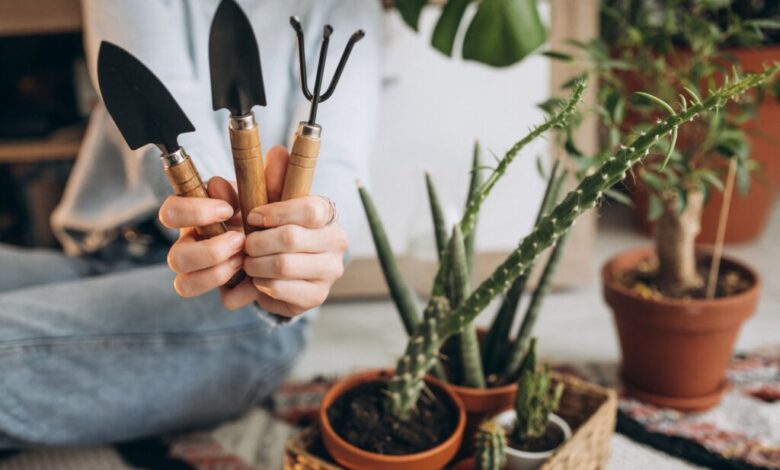
A narrow hand trowel helps with repotting, topdressing, and soil mixing. Choose one designed for indoor use – smaller than garden trowels.
Look for narrow blades that fit in 4-6 inch pots. Garden-sized trowels are too wide for small containers.
Stainless steel blades last forever and clean easily. Plastic trowels work but break eventually.
I use mine constantly during repotting season. It’s also perfect for adding fertilizer to soil surface without disturbing roots.
Chopstick or Bamboo Skewer
This humble tool handles multiple tasks. Use it to settle soil when repotting, stake small plants, or test soil moisture.
The narrow profile reaches into tight spaces between stems without damaging growth.
When repotting, gently work it through fresh soil to eliminate air pockets. This settles soil naturally without compacting.
Testing soil moisture works by inserting it fully and checking if it comes out damp or dry.
Free chopsticks from takeout work perfectly. I keep several handy for various tasks.
Soft Cloth or Sponge
Cleaning leaves removes dust that blocks light and clogs stomata. It also reveals pest problems early.
Microfiber cloths work wonderfully. They attract dust and don’t leave lint or streaks.
Damp cloths clean better than dry. Use room temperature water without any cleaning products.
Support leaves from underneath while wiping tops. This prevents breaking or creasing delicate foliage.
Regular cleaning keeps plants looking beautiful and functioning efficiently. I wipe large-leaved plants monthly as part of routine care.
Labels and Marker
Keeping track of plant names and care dates prevents confusion in growing collections.
Plastic plant labels (the kind from nurseries) last years outdoors and indefinitely indoors.
Permanent markers fade over time. Pencil lasts longer on plastic labels than any pen I’ve tried.
Label new plants immediately with name and purchase date. Add care reminders for species with special needs.
Recording repotting dates helps determine when plants need fresh soil. I date-stamp after every repotting.
Optional But Nice Tools
These items enhance plant care but aren’t necessary for basic maintenance. Consider them as your collection grows.
Plant Caddy or Dolly
Moving large plants for watering, cleaning, or repositioning becomes difficult as collections grow.
Plant caddies with wheels make rotating heavy pots effortless. No more struggling with 50-pound containers.
Choose caddies rated for your largest pot weights. Cheap versions break under heavy loads.
They’re especially valuable for floor plants that need moving for thorough watering or seasonal light adjustments.
I resisted buying these for too long. Now I own three and wish I’d invested sooner.
Humidifier
Humidity makes huge differences for tropical plants. A small humidifier maintains consistent moisture levels.
Cool mist ultrasonic humidifiers work perfectly for plant areas. They’re quiet and energy-efficient.
Size capacity to your space. Small rooms need only 1-2 liter capacity. Large rooms or multiple plant areas need 3-4 liters or more.
Built-in humidistats maintain target humidity automatically. This prevents both under and over-humidifying.
Since adding humidifiers to my plant spaces, brown leaf tips virtually disappeared and growth rates increased noticeably.
Grow Lights
Supplemental lighting extends growing seasons and supports plants in low-light homes.
LED grow lights are most efficient and produce minimal heat. They’ve improved dramatically in recent years.
Full-spectrum lights support both growth and flowering. Single-spectrum lights work for specific purposes.
Timer-controlled lights ensure consistent photoperiods. Most plants prefer 12-14 hours of light daily.
Grow lights opened up plant possibilities in my north-facing apartment. I can now grow species that previously struggled.
Hygrometer
These measure humidity levels in your plant area. Knowing actual humidity helps you adjust care appropriately.
Digital hygrometers cost $10-20 and provide accurate readings. Place them at plant height for relevant data.
Many show maximum and minimum values. This reveals humidity fluctuations throughout the day.
High humidity encourages some pests but prevents others. Knowing your baseline helps troubleshoot problems.
I have hygrometers in several plant areas. The readings surprised me – humidity varies more than I expected between rooms.
Propagation Supplies
If you enjoy creating new plants from cuttings, gather basic propagation supplies.
Small clear containers or glasses for water propagation let you monitor root development.
Rooting hormone powder or gel improves success rates for difficult-to-root species.
Small pots (2-3 inch) for potting rooted cuttings keep costs down and match young plant size.
Plastic bags or humidity domes maintain moisture around cuttings during rooting.
Propagation transformed my plant hobby into something more engaging. Watching roots develop is endlessly fascinating.
Tool Organization Tips
Having tools doesn’t help if you can’t find them. Proper organization keeps everything accessible.
Dedicated Storage Area
Designate one location for all plant care supplies. This prevents hunting through various closets for what you need.
A small cart, caddy, or shelf near your plants works perfectly. Everything stays together and accessible.
Keep most-used items at eye level. Deep storage for seasonal items like dormant plant supplies.
I use a rolling cart that moves between plant areas. It holds everything I need for routine care.
Tool Maintenance
Clean tools after each use, especially cutting implements. Soil and sap residue harbor disease.
Sharpen cutting tools regularly. Dull blades make plant care frustrating and harm plants.
Check spray bottles periodically. Clogged nozzles and mineral buildup reduce effectiveness.
Replace worn items before they fail completely. Broken tools mid-task create frustration.
Labeling Solutions
Label fertilizers, pest treatments, and other solutions clearly. Mistaking one for another causes problems.
Date-stamp opened products. Some have limited shelf life after opening.
Store similar products together. All pest treatments in one area, fertilizers in another.
What You DON’T Need
Marketing pushes many unnecessary tools on new plant parents. These items rarely justify their cost.
Leaf Shiners
Commercial leaf shine products coat leaves with silicone or wax. They look artificial and can clog stomata.
Water and a cloth clean leaves perfectly. Skip the bottles of shine spray.
If you want genuine shine, healthy leaves produce their own natural glossiness with good care.
Self-Watering Globes
These decorative globes promise easier watering but often overwater plants instead.
They provide no control over watering amounts. Plants get whatever the globe releases.
Learning proper watering teaches you to read plant needs. Globes prevent this skill development.
Expensive Moisture Meters
Basic analog meters work as well as $50 digital versions for houseplant purposes.
The extra features on expensive meters add little value for indoor gardening.
Save money on meters and invest in better pots, soil, or plants themselves.
Specialized Single-Use Tools
Tools that do only one specific task rarely get used enough to justify storage space.
Look for versatile tools that handle multiple tasks. This reduces clutter and increases utility.
Before buying, ask: “Will I use this monthly or more?” If not, skip it.
Building Your Toolkit Over Time
You don’t need everything immediately. Build your collection gradually as needs arise.
Starter Kit (First Month)
Begin with absolute essentials:
- Watering can
- Pruning shears
- Spray bottle
- Saucers for all pots
This minimal kit handles 80% of routine care. Add tools as you encounter specific needs.
Expanding (Months 2-6)
Add helpful secondary tools as your collection grows:
- Moisture meter
- Potting mat
- Hand trowel
- Soft cleaning cloths
These make existing tasks easier without being critical for plant survival.
Growing Collection (6+ Months)
Consider optional tools based on your specific situation:
- Humidifier if you have many tropical plants
- Grow lights for low-light spaces
- Plant caddies for large floor plants
- Propagation supplies if you enjoy creating new plants
By this point, you understand your needs. Invest in tools that solve actual problems you’re experiencing.
Choosing Quality Over Quantity
Better to own few quality tools than many cheap ones. Well-made tools last years and perform better.
What Defines Quality
Solid construction without wobbly parts or thin plastic. Tools should feel substantial.
Comfortable grips that don’t cause hand fatigue. You’ll use comfortable tools more often.
Replaceable parts when applicable. Spray bottle nozzles and watering can spouts should be removable for cleaning.
Warranty or guarantee from reputable brands. This indicates manufacturer confidence in their products.
When to Splurge
Watering cans justify higher investment. You’ll use them constantly for years.
Pruning shears are worth buying quality. Sharp, durable blades make every cut easier.
Grow lights if you’re serious about supplemental lighting. Cheap LED panels often fail quickly or produce poor spectrum.
When to Save
Saucers and trays can be basic plastic. Functionality matters more than aesthetics.
Spray bottles work fine from discount stores. You’ll replace them periodically regardless of price.
Moisture meters don’t need to be expensive. Basic analog models work perfectly.
Conclusion
Essential indoor gardening tools are simpler than marketing suggests. A watering can, pruning shears, spray bottle, and saucers handle most daily plant care needs.
Build your toolkit gradually based on actual needs. Don’t accumulate tools you’ll rarely use just because they seem helpful.
Invest in quality basics that you’ll use frequently. Cheap tools that break quickly cost more than buying quality initially.
Organization matters as much as having the right tools. Accessible, well-maintained tools make plant care easier and more enjoyable.
Start with the must-have basics and add tools as your experience reveals specific needs. Your toolkit should grow with your collection and skills.
Evaluate your current tools today. Do you have the essentials? Are you missing anything that would make routine care easier? Focus on addressing genuine gaps rather than accumulating unnecessary items.
Happy Planting, Jasmine
METADATA
URL SLUG: essential-indoor-gardening-tools

SEO TITLE (44 chars): Essential Indoor Gardening Tools

META DESCRIPTION (159 chars):
FOCUS KEYPHRASE:
ADDITIONAL KEYPHRASES:
-
- houseplant care tools
- plant care essentials
- indoor plant tools

CATEGORIES: Plant Care, Beginner Guides, Tools and Equipment
TAGS: gardening tools, indoor plants, plant care, houseplants, equipment, beginner tips

READING TIME: 11-13 minutes
WORD COUNT: 2,680 words