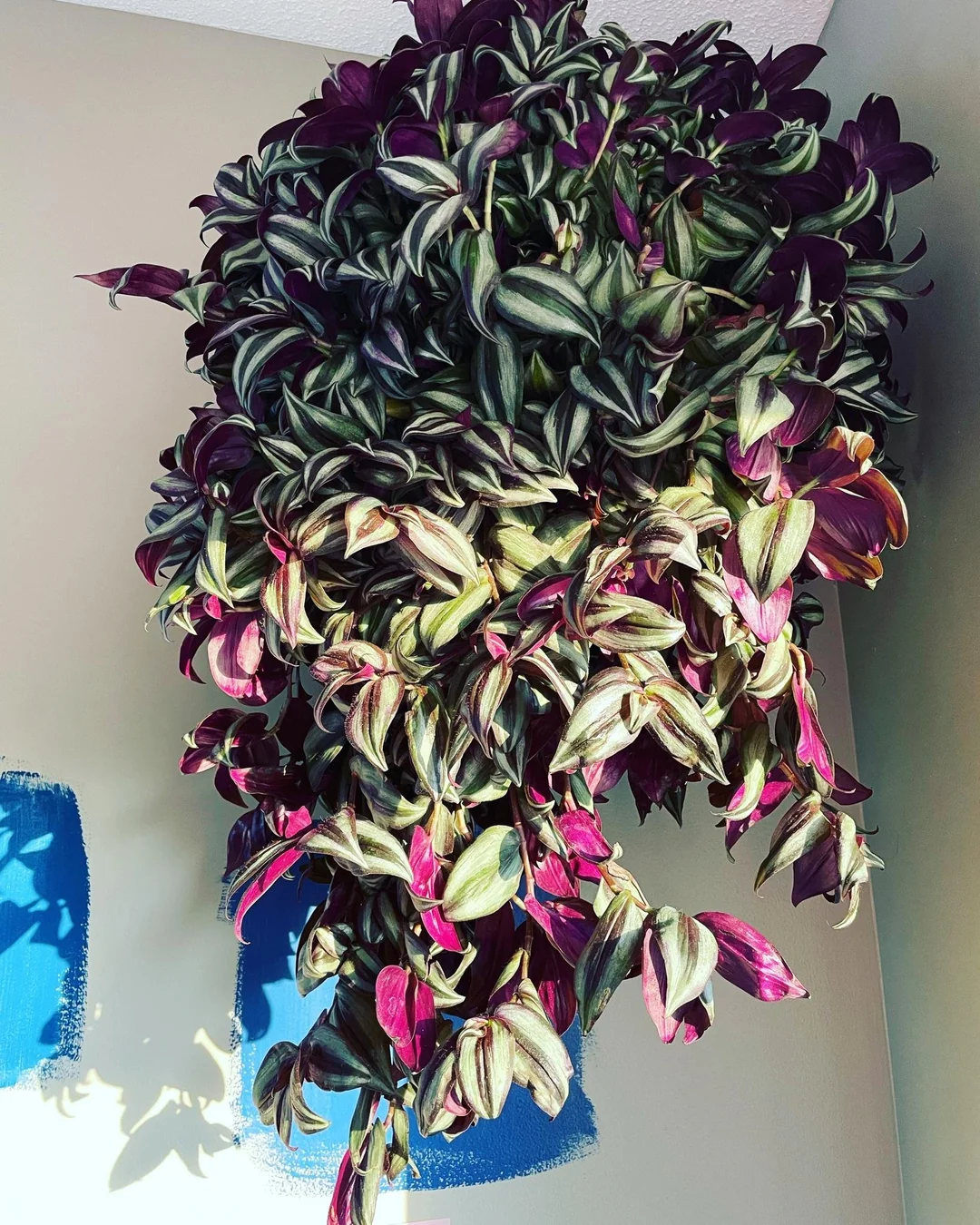
Purple plants stopped me in my tracks the first time I saw a Tradescantia zebrina in someone’s home. I didn’t know houseplants could be that color. The deep purple leaves with silver stripes looked almost unreal. I bought one the next day and quickly became obsessed with collecting purple foliage.
Purple indoor plants add dramatic color that green plants simply can’t match. They create focal points, complement any decor style, and bring unexpected sophistication to your space. The best part? Many purple varieties are just as easy to care for as common green houseplants.
In this guide, I’m sharing the 7 most beautiful purple indoor plants that actually thrive indoors. These aren’t difficult rarities – they’re accessible options that deliver stunning purple foliage with straightforward care. You’ll learn what makes each special and how to keep their colors vibrant.

Why Purple Plants Look Purple
Understanding why plants develop purple coloration helps you maintain those rich colors once you bring them home.
The Science Behind Purple Leaves
Purple color in plants comes from anthocyanins, pigments that reflect red and blue light. These pigments develop in addition to chlorophyll, not instead of it.
Plants still need chlorophyll for photosynthesis. The purple anthocyanins layer over the green chlorophyll, creating the purple hues we see.
Light intensity affects purple coloration. Many purple plants develop deeper colors in brighter light as they produce more anthocyanins to protect against sun damage.
Some varieties are genetically selected for high anthocyanin production. Breeders choose and propagate plants with the most intense purple coloring.
Maintaining Purple Coloration
Adequate light is crucial for keeping purple plants purple. Insufficient light causes them to produce less anthocyanins, and leaves fade toward green.
Most purple plants need bright indirect light to maintain their color. They typically need more light than their green counterparts.
Some varieties revert to green in low light as a survival mechanism. The plant reduces energy-expensive anthocyanin production to focus on basic photosynthesis.
Temperature can also affect coloration. Some plants develop deeper purple tones in slightly cooler conditions.
I learned this the hard way when my purple Oxalis faded to nearly all green. Moving it closer to the window brought back the vibrant purple within weeks.
7 Stunning Purple Indoor Plants
These plants represent the best combination of beautiful purple foliage and reliable indoor performance.
1. Purple Wandering Jew (Tradescantia zebrina)
Tradescantia zebrina tops the list for vibrant purple coloring and incredibly easy care. The deep purple leaves with silver stripes create stunning visual impact.
Why It’s Beautiful:
- Rich purple undersides with silver-striped tops
- Trailing growth perfect for hanging baskets
- Fast-growing for quick visual impact
- Produces delicate three-petaled flowers
Care Requirements:
- Light: Bright indirect light for best color
- Water: Keep lightly moist, allow slight drying
- Temperature: Average room temperature (60-80°F)
- Humidity: Tolerates average home humidity
Keeping Colors Vibrant:
Bright light is essential for deep purple coloring. In lower light, leaves fade to more green and silver.
Pinch growing tips regularly to encourage bushier growth. This creates fuller plants with more purple foliage.
Rotate the plant weekly so all sides receive equal light. This prevents lopsided growth and maintains color throughout.
The trailing stems can grow several feet long. Prune back when needed to maintain desired length and encourage branching.
Propagation:
Stem cuttings root incredibly easily in water or soil. Each node can produce roots, making propagation almost foolproof.
I started with one small tradescantia and now have five full plants from cuttings. It’s one of the easiest plants to share with friends.
2. Purple Waffle Plant (Hemigraphis alternata)
Purple waffle plant has deeply textured leaves with metallic purple undersides that seem to shimmer in changing light. The puckered, waffle-like texture adds dimension beyond just color.

Distinctive Features:
- Deeply textured, wrinkled leaves
- Metallic purple undersides catch light beautifully
- Green tops with purple showing through veins
- Compact growth habit (6-8 inches tall)
Care Basics:
- Light: Medium to bright indirect light
- Water: Keep consistently moist, not soggy
- Temperature: Warm (65-80°F)
- Humidity: Prefers higher humidity (50%+)
Maximizing Purple Color:
Medium to bright indirect light brings out the most intense purple coloring. Too little light causes greener leaves with less purple.
Higher humidity enhances both growth and color. Use pebble trays or group with other plants to increase moisture.
Consistent moisture keeps leaves looking their best. Drying out causes crispy edges and dulls the metallic sheen.
Pinch back leggy growth to maintain compact, bushy form. This also encourages more of the beautiful purple leaves.
Special Considerations:
Purple waffle plant can be slightly more demanding than other purple options. It needs consistent moisture and humidity.
But the effort pays off in spectacular foliage that looks almost artificial in its metallic purple shimmer.
3. Purple Heart (Tradescantia pallida)
Purple heart lives up to its name with solid purple leaves and stems. The entire plant is purple, creating bold, dramatic impact.

Standout Qualities:
- Completely purple foliage, stems, and flowers
- Pointed, lance-shaped leaves
- Trailing or upright growth depending on support
- Pink three-petaled flowers contrast beautifully
Growing Conditions:
- Light: Bright light, tolerates some direct sun
- Water: Moderate watering, drought-tolerant
- Temperature: Warm (60-85°F)
- Humidity: Tolerates dry air
Maintaining Deep Purple:
Bright light, including some direct morning sun, produces the deepest purple coloring. This plant can handle more direct light than most purple varieties.
In lower light, leaves gradually shift toward greenish-purple. If color fades, increase light exposure.
Allow soil to dry slightly between waterings. Purple heart is somewhat drought-tolerant and handles occasional neglect.
Prune regularly to control size and encourage bushier growth. Unpruned plants become leggy with sparse foliage.
Versatility:
Purple heart works beautifully as a trailing plant in hanging baskets or as upright growth in regular pots with pruning.
The completely purple foliage makes a bold statement that works surprisingly well with many color schemes.
4. Rex Begonia (Begonia rex-cultorum)
Rex begonias offer incredible variety in purple patterns and shades. Each variety displays unique purple, silver, and pink combinations that look hand-painted.

Visual Appeal:
- Large, asymmetrical leaves with complex patterns
- Purple mixed with silver, pink, red, or green
- Textured, sometimes spiraled leaves
- Compact growth perfect for tabletops
Care Requirements:
- Light: Bright indirect light, no direct sun
- Water: Keep lightly moist with good drainage
- Temperature: Moderate (60-75°F)
- Humidity: High humidity (60%+) ideal
Preserving Pattern and Color:
Bright indirect light maintains vibrant purple patterns. Direct sun burns the delicate leaves and fades colors.
High humidity is crucial for rex begonias. They struggle in dry air, developing brown leaf edges.
Keep soil consistently lightly moist. Both overwatering and underwatering stress these plants and dull leaf colors.
Avoid getting water on the leaves when possible. Water spots can mark the foliage and promote fungal issues.
Variety Selection:
Hundreds of rex begonia varieties exist with different purple patterns. Some have mostly purple leaves with silver accents, others show purple only in veins or edges.
Visit a specialty nursery to see various patterns in person. The diversity is stunning and slightly addictive.
5. Purple Oxalis (Oxalis triangularis)
Purple oxalis has distinctive triangular leaves that fold up at night, creating movement and interest beyond static foliage. The deep burgundy-purple is nearly black in some lighting.

Unique Characteristics:
- Triangular, shamrock-shaped leaves
- Leaves fold up at night, open during day
- Deep burgundy-purple, almost black color
- Delicate white or pink tubular flowers
Growing Needs:
- Light: Bright indirect to medium light
- Water: Keep lightly moist during growth
- Temperature: Cool to moderate (60-75°F)
- Humidity: Average home humidity fine
Understanding Growth Cycles:
Oxalis grows from small bulbs and has natural dormancy periods. Don’t panic if it dies back completely – this is normal.
During dormancy (usually after flowering), reduce watering. The bulbs rest for several weeks to months.
New growth emerges when the plant is ready. Resume normal watering as new shoots appear.
The dramatic daily leaf movement adds interactive appeal. Leaves visibly respond to light changes throughout the day.
Color Maintenance:
Bright light produces the deepest purple-black coloring. In lower light, leaves become more reddish-purple.
The contrast between dark purple leaves and bright flowers is spectacular. Adequate light encourages more blooms.
I love watching my oxalis “wake up” each morning as the leaves unfold. It’s like having a living sculpture that changes throughout the day.
6. Purple Passion Plant (Gynura aurantiaca)
Purple passion plant is covered in soft purple hairs that give it a fuzzy, almost velvet appearance. The purple is structural rather than just pigmented.

Striking Features:
- Covered entirely in bright purple hairs
- Velvety, almost furry texture
- Deep green base color shows through purple
- Orange flowers (remove for better foliage)
Care Guidelines:
- Light: Bright indirect light essential
- Water: Keep lightly moist, good drainage
- Temperature: Warm (65-75°F)
- Humidity: Average to higher humidity
Maximizing Purple Fuzz:
Very bright indirect light produces the most vibrant purple hair color. Insufficient light causes greener appearance with less purple.
The purple hairs are the plant’s distinguishing feature. Adequate light keeps them thick and brilliantly colored.
Avoid touching leaves frequently. The hairs can be damaged by handling, reducing the fuzzy appearance.
Remove orange flowers as they appear. The flowers have an unpleasant odor and removing them keeps energy focused on colorful foliage.
Growth Management:
Purple passion plant can become leggy without regular pruning. Pinch growing tips frequently to encourage bushier growth.
Propagation from stem cuttings is easy. Root cuttings in water and plant when roots develop.
The unique fuzzy purple texture makes this plant a conversation starter. People always want to touch it.
7. Calathea (Calathea roseopicta)
Certain calathea varieties feature stunning purple undersides that flash when leaves move. The combination of patterned tops and purple undersides creates dimensional color.
Distinctive Attributes:
- Painted, patterned leaf tops in green, pink, cream
- Deep purple to burgundy undersides
- Leaves fold up at night showing purple
- Prayer plant movement adds interest
Care Essentials:
- Light: Medium to bright indirect, no direct sun
- Water: Keep consistently moist with filtered water
- Temperature: Warm and stable (65-80°F)
- Humidity: High humidity (50-60%+) critical
Maintaining Health and Color:
High humidity is non-negotiable for calatheas. Brown, crispy edges indicate humidity is too low.
Use filtered or distilled water. Calatheas are sensitive to tap water chemicals that cause brown leaf edges.
Consistent moisture without waterlogging keeps leaves vibrant. Let just the top inch dry between waterings.
Stable temperature without drafts or sudden changes prevents stress that dulls coloring.
The Purple Reveal:
The purple undersides create dramatic visual impact when leaves fold at night or move in air currents.
Some varieties like ‘Dottie’ show more purple than others. Research specific cultivars for the most purple coloring.
Calatheas are more demanding than other purple plants on this list. But for stunning purple undersides with spectacular patterning, they’re worth the extra care.
Caring for Purple Plants
While each species has specific needs, general principles apply to maintaining vibrant purple foliage across varieties.
Light Requirements
Most purple plants need more light than green varieties. The anthocyanin production that creates purple coloring requires energy from photosynthesis.
Bright indirect light works best for maintaining vibrant purple. This means near windows but not in direct sun beams that can burn leaves.
Rotate plants regularly so all sides receive equal light exposure. This prevents lopsided growth and ensures even coloring throughout.
Supplemental grow lights help during dark winter months. Even purple plants adapted to lower light benefit from supplementation in short winter days.
Watch for color changes indicating light issues. Fading toward green means insufficient light. Burned, crispy edges mean too much direct sun.
Watering Balance
Purple plants span the spectrum from drought-tolerant to moisture-loving. Match watering to each species’ preferences.
General rule: keep soil lightly moist for tropical purple varieties. Allow slight drying for more succulent types like purple heart.
Overwatering is still the most common killer. Ensure pots have drainage and never let plants sit in standing water.
Water quality matters for sensitive species. Use filtered or distilled water for rex begonias and calatheas to prevent leaf edge damage.
Temperature and Humidity
Most purple houseplants prefer warmth. Keep temperatures above 60°F for best growth and color.
Temperature stability matters more than specific ranges. Avoid placing plants near drafty windows or heating vents.
Higher humidity benefits most purple varieties. Group plants together, use pebble trays, or run humidifiers during dry seasons.
Some purple plants tolerate average home humidity. Tradescantias and purple heart adapt well to typical indoor conditions.
Fertilizing for Color
Balanced fertilizer during growing season supports healthy growth and color production. Monthly feeding works for most varieties.
Don’t over-fertilize assuming more nutrients equal more color. Excess fertilizer causes more harm than good.
Dilute liquid fertilizer to half strength to prevent burn. Gentle, consistent feeding works better than occasional heavy applications.
Some growers report slightly increased purple coloring with fertilizers higher in phosphorus. This isn’t proven universally but worth experimenting with.
Displaying Purple Plants
Strategic placement maximizes the visual impact of purple foliage in your home.
Color Combinations
Purple pairs beautifully with white or cream backgrounds. The contrast makes the purple appear even more vibrant.
Silver or gray accents complement purple tones. Consider containers or nearby decor in metallic finishes.
Green and purple create natural harmony. Mixing purple plants with green varieties adds depth and interest.
Avoid clashing with orange or yellow in immediate vicinity. These warm tones can compete visually with purple’s cool tones.
Lighting for Display
Position purple plants where natural light illuminates them. Backlit purple leaves glow with translucent beauty.
Consider light direction throughout the day. Morning east light or afternoon west light can dramatically showcase purple foliage.
Artificial accent lighting can highlight purple plants in evening hours. Small spotlights or uplights create dramatic effects.
Container Selection
White or light-colored pots let purple foliage shine. Dark containers can cause purple to blend rather than pop.
Metallic containers (copper, silver, gold) complement purple beautifully. The shine enhances the richness of purple leaves.
Clear glass containers work wonderfully for trailing purple plants. The roots become part of the display.
Consider texture too. Smooth, modern containers emphasize the organic nature of living purple foliage.
Troubleshooting Purple Plant Problems
Even easy-care purple plants occasionally have issues. Quick identification and response prevents major problems.
Fading to Green
Insufficient light is the most common cause of purple fading to green. Move to a brighter location with indirect light.
Check for changes in surrounding environment. Did nearby trees leaf out, blocking previous light? Did you move the plant?
Increase light exposure gradually. Sudden moves from low to very bright light can shock plants.
Purple color should return within weeks of increased light. New growth shows improved color first, with existing leaves gradually intensifying.
Brown Leaf Edges
Low humidity causes brown, crispy edges on many purple plants. Increase moisture in the air around the plant.
Water quality issues also cause browning. Switch to filtered or distilled water for sensitive varieties.
Over-fertilizing can burn leaf edges. Flush soil with water and reduce fertilizer concentration.
Leggy Growth
Insufficient light causes stretching as plants reach for more light. This creates long stems with sparse leaves.
Prune back leggy growth and move to brighter location. New growth should be more compact.
Pinch growing tips regularly to encourage bushier form. This prevents legginess before it becomes a problem.
Pest Problems
Purple plants attract the same pests as green plants: spider mites, mealybugs, aphids.
Inspect regularly, especially leaf undersides. Early detection makes treatment much easier.
Isolate any plant showing pest activity. This prevents spread to your entire collection.
Treat with insecticidal soap or neem oil. Multiple applications are usually necessary.
Conclusion
Purple indoor plants transform ordinary houseplant collections into something special. The dramatic foliage adds color, interest, and sophistication that green plants alone can’t achieve.
Start with one of the easier varieties like Tradescantia zebrina or purple heart. These forgiving plants let you learn purple plant care without high stakes.
Pay attention to light levels. Most purple plants need bright indirect light to maintain their stunning colors. This single factor determines success more than any other.
Once you’ve mastered one purple plant, expand your collection. The variety of purple shades, patterns, and textures available means you’ll never run out of beautiful options.
My home looks completely different since adding purple plants throughout. They draw the eye, create focal points, and spark conversations. Guests always comment on the unexpected colors.
Choose your first purple plant this week. Give it the bright light it needs and watch those rich purple tones develop. You’ll understand why purple foliage is so addictive once you see it thriving in your space.
Happy Planting, Jasmine